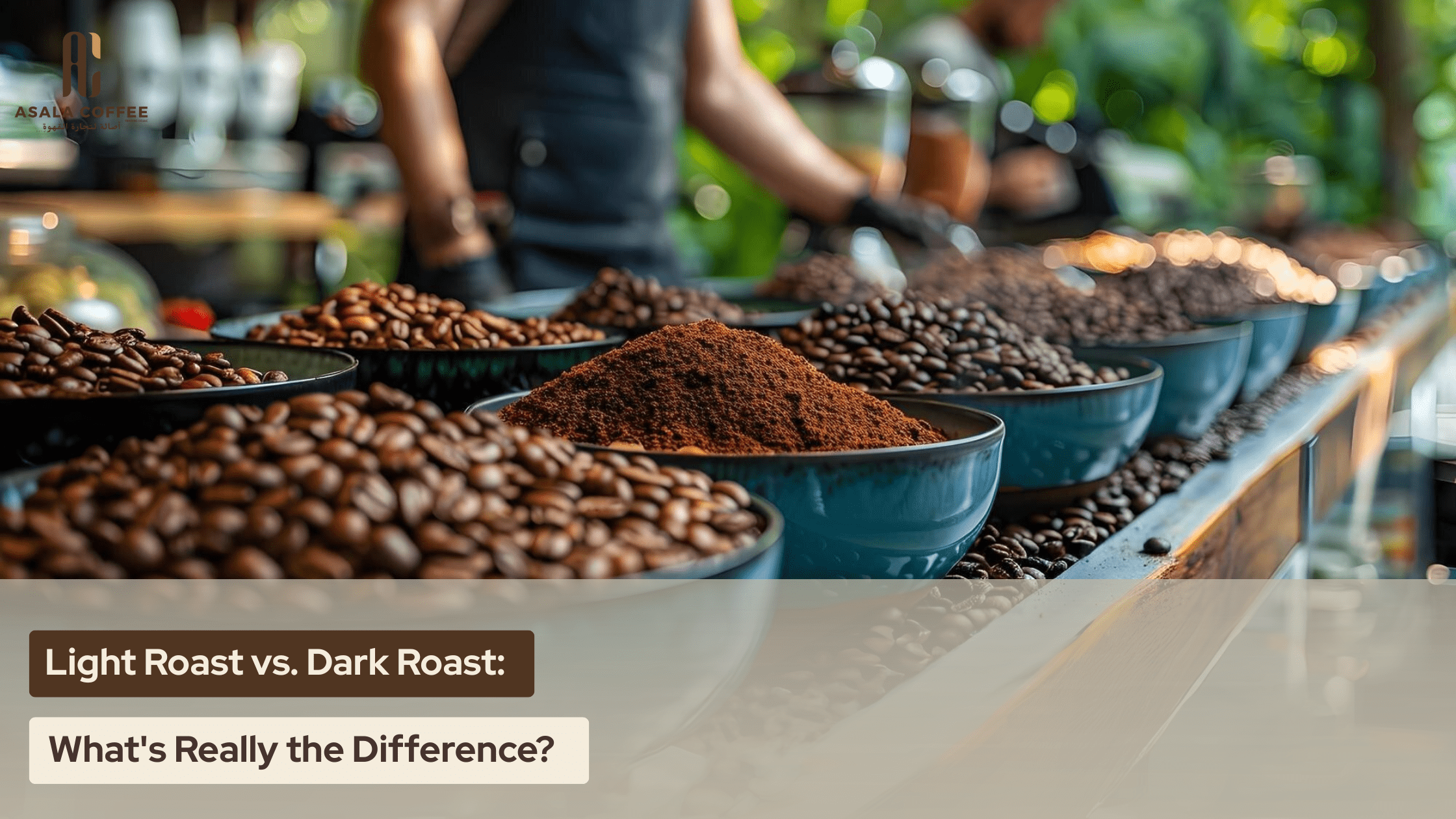
You’re standing in front of a wall of coffee bags at your local roastery. On one side, the labels boast “Bright & Fruity Light Roast!” On the other, “Bold & Smoky Dark Roast!” It’s a common crossroads for coffee lovers, often clouded by a big misconception: that dark roast is “stronger” and has more caffeine.
But what if everything you thought you knew was wrong? The truth is, the journey from green seed to aromatic bean is a story of heat, time, and taste. Understanding the real difference between light and dark roast is the key to unlocking a world of flavor and finding your perfect cup.
Let’s dive in and bust the myths for good.
The Roasting Process: It’s All About Heat
First, let’s talk about what roasting actually does. A coffee bean is a seed. Roasting transforms it, creating the complex oils, aromas, and flavors we love.
Light Roast beans are roasted for the shortest time, stopping shortly after the “first crack” (a popping sound similar to popcorn). This preserves the bean’s original character.
Dark Roast beans are roasted for longer, through or beyond the “second crack.” This process breaks down the bean’s inherent flavors and creates deeper, roast-driven notes.
Visual Cue: Think of toasting marshmallows. A light toast gives you a warm, gooey center with a hint of caramel. A dark toast gives you a crisp, smoky, charred flavor. The same principle applies to coffee.
Myth Busting: The Caffeine Showdown
Here’s the biggest myth we’re going to bust: Dark roast does NOT have more caffeine.
In fact, the opposite is often true.
The Science: Caffeine is remarkably stable during roasting. However, coffee beans lose water mass and expand in size as they roast.
By Volume (using scoops): A scoop of light roast contains denser, smaller beans. Therefore, you get more coffee beans (and thus more caffeine) per scoop compared to a scoop of larger, less-dense dark roast beans. Winner: Light Roast.
By Weight (using a scale): If you measure your coffee by weight (e.g., 20 grams), the caffeine content is nearly identical. The slight loss of caffeine in dark roast is almost negligible. Winner: It’s a Tie.
The Verdict: While the difference is small, light roast technically wins if you measure by volume. But the real takeaway is that dark roast is certainly not “stronger” in terms of caffeine. The perception of strength comes from flavor, not stimulant content.
Flavor Profile: A Tale of Two Coffees
This is where the magic happens. The roast level dramatically changes the taste of your coffee.
Which Roast is Right for You? A Simple Guide
Stop thinking about “strength” and start thinking about “flavor preference.”
Choose a LIGHT ROAST if you:
Drink your coffee black.
Enjoy exploring subtle, nuanced flavors.
Appreciate the story behind where your coffee comes from.
Prefer a brighter, less bitter cup.
Choose a DARK ROAST if you:
Take your coffee with milk, cream, or sugar.
Love a classic, bold, and robust coffee taste.
Prefer a low-acidity, smooth cup.
Are a fan of espresso-based drinks like lattes and cappuccinos.
(And don’t forget about Medium Roast—the perfect balance of origin flavor and roast sweetness, great for almost any brew method!)
The Final Sip
The battle between light and dark roast isn’t about which is better—it’s about understanding what they offer. Light roast is a passport to a coffee farm’s unique terrain, while dark roast is the comforting, bold signature of the roaster’s craft.
Forget the myth of “stronger” caffeine. Let your taste buds be your guide. The best way to know? Grab a bag of each and brew them side-by-side. You might be surprised at which one truly wakes up your palate.